
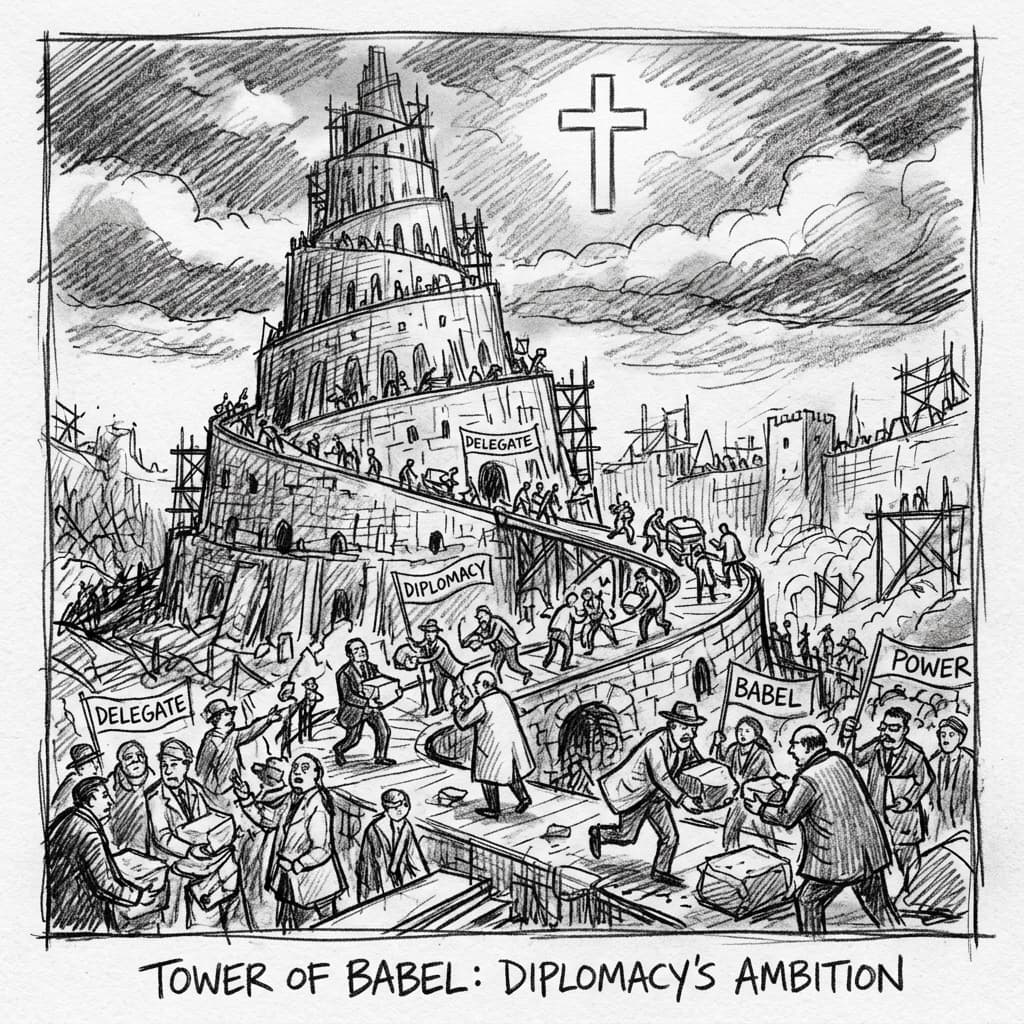
When Francis Fukuyama published his famous essay "The End of History and the Last Man", the Western establishment breathed a sigh of relief. The Soviet collapse seemed to empirically validate that liberal democracy and the globalized free market constituted the final evolutionary destiny of humanity. A perpetual secular peace seemed guaranteed.
Three decades later, Fukuyama's diagnosis lies in ruins, evidencing the founding error of Enlightenment political philosophy: the denial of classical human nature. Progressive liberalism committed the inverted Platonic error; It tried to fit reality into its ideological matrix instead of adjusting its model to reality.
The current crisis in the West—marked by extreme polarization, social atomization, demographic decline, and the emergence of new sovereignist geopolitical blocs—is not a simple "blip" on the path to global progress. It is the logical consequence of having extirpated the transcendent foundations of society. Aristotle and Cicero already warned that a political community (the polis or the res publica) cannot be sustained exclusively on commercial contracts and procedural utilitarianism. It requires an objective moral mortar.
Globalism sought to replace natural loyalties (family, homeland, tradition) with abstract global citizenship and hedonistic consumerism. By emptying man of his vertical dimension, the "last man" Fukuyama turned out to be a fragile, nihilistic and deeply manipulable creature. The resurgence of particularisms and national sovereignties that we witness today is simply natural reality imposing itself, like water breaking the dams of a paper utopia.
Legal Note: This critical analysis is carried out under the protection of Art. 28 (news of general interest) and Art. 10 (right of citation) of Law 11,723 on Intellectual Property of the Argentine Republic. The original work and its title belong to its respective author and publication medium, cited on this page.