
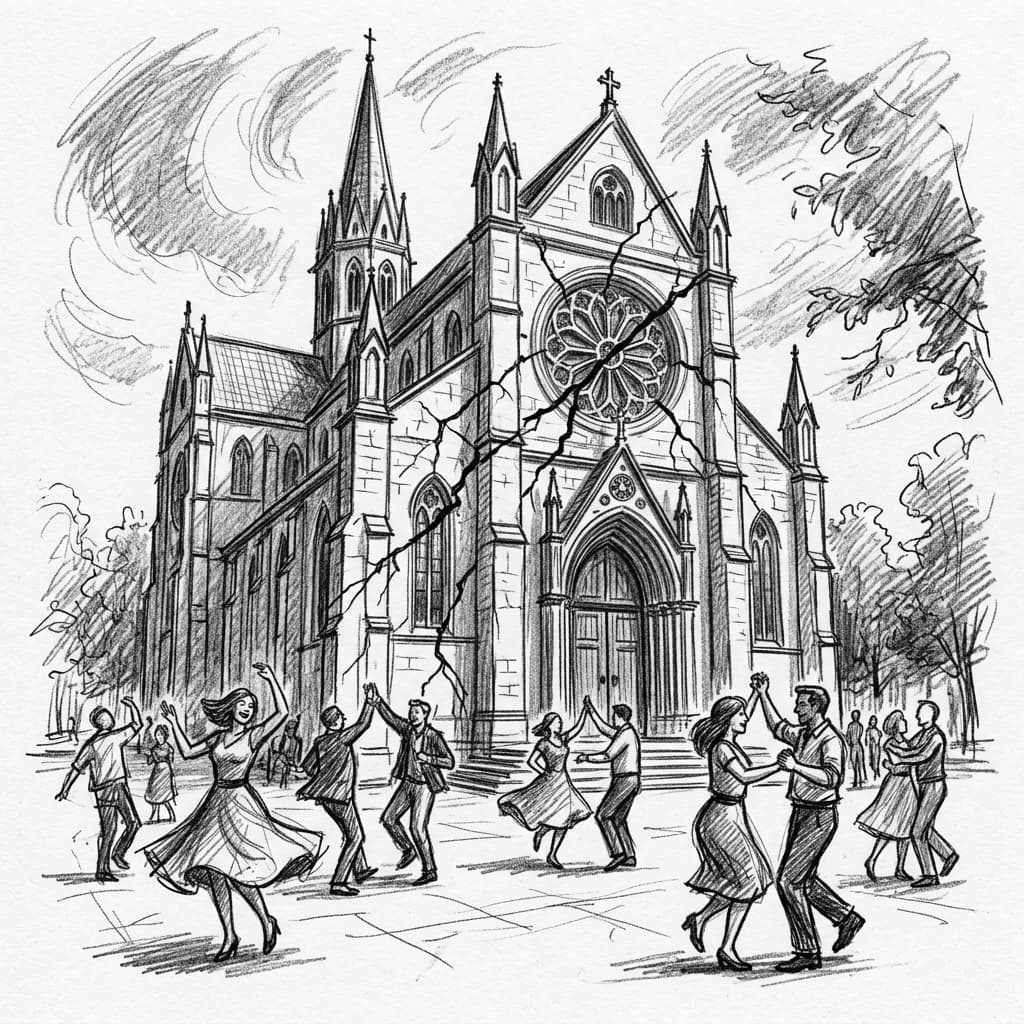
With unparalleled prophetic lucidity, Saint Pius On the horizon of the 21st century, we are witnesses of the empirical deployment of this magisterial warning. The severe crisis that is eroding ecclesiastical structures is not merely institutional or administrative in nature; This is a fundamentally theological, liturgical and philosophical implosion.
The epistemological engine of modernism lies in the immanentist postulate that Truth is evolutionary and requires its permanent updating to the "signs of the times." With this sociological sophistry, immutable dogmas are reinterpreted under Marxist or liberal categories, and objective faith is reduced to the subjectivism of religious feeling (vital immanence). This systematic surrender to the secular spirit has germinated a liquid and horizontal pastoral ministry. The eschatological truths—the very new ones: death, judgment, hell and glory—have been supplanted by climate and philanthropic activism, bringing the praxis of the Mystical Body of Christ closer to the operational dynamics of a progressive NGO.
The sacred liturgy, supreme codification of the lex credendi (the rule of what the Church believes), has absorbed the most visible impact of this Protestant secularization. Where the sense of the Mystery, theocentric worship and the numinous prevailed, today assembly liturgies, experimental and markedly anthropocentric in nature, proliferate, which tend to eclipse the propitiatory dimension and sacrifice of Calvary, diluting it in a self-referential emotional communion.
This surrender of the Catholic intellect in the face of modern philosophical relativism has unleashed desolation in the houses of priestly formation, the dissolution of traditional orders and the serious disorientation of the People of God. By assuming that Truth lacks immutable objectivity and must fluctuate with the zeitgeist, Revelation is stripped of its binding authority. Thus triumphs a syncretist ecumenism that, protected by the bureaucratic language of "dialogue", de facto gives in to the imperative mandate of evangelization and the salvation of souls.
Faced with the dissolution of identity, the non-negotiable return to Tradition is imposed. This return is not due to a mere romantic aestheticism; responds to the political and ontological certainty that it is in the traditional deposit where the entire Faith is kept, refractory to the mirages of immanentist enlightenment. Only anchored in the solidity of perennial dogma and in a liturgy of inviolable transcendence, the Church will resist as a Boat of Salvation against the hegemony of postmodern relativism.
Lic. Juan Pablo Torres-Lozano Doctor in Metaphysics and Ecclesiastical Philosophy. Graduate in Political Science and Sociology.
Legal Note: This critical analysis is carried out under the protection of Art. 28 (news of general interest) and Art. 10 (right of citation) of Law 11,723 on Intellectual Property of the Argentine Republic. The original work and its title belong to its respective author and publication medium, cited on this page.