
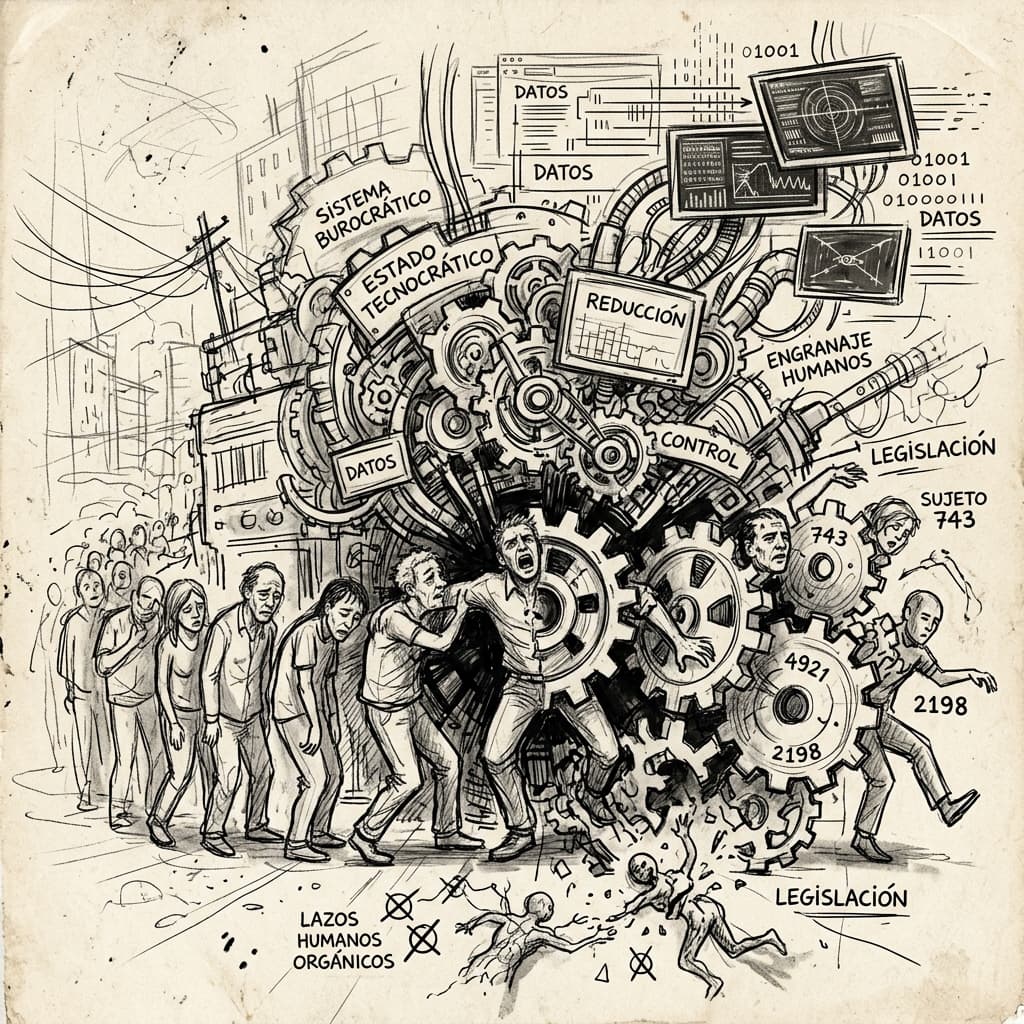
The international socio-political situation is going through a systematic process of deconstruction of national sovereignty that, far from being a spontaneous phenomenon of peaceful integration of peoples, responds to a technocratic project of concentration of moral, legal and economic power. In diplomatic forums and transnational decision-making circles, the premise has been enshrined that historical traditions, homeland jurisdictions, and the cultural identity of nations constitute archaic obstacles to the efficient administration of a unified global village. Under this paradigm, politics is no longer conceived as the prudential exercise of government ordered to the concrete common good of a real polis, but as the simple bureaucratic execution of homogeneous directives emanating from uprooted institutional structures.
To understand the root of this representative crisis, it is essential to move away from both the naive optimism of secular progressivism and the rhetorical simplisms that attribute global drift to schematic hidden plots. The real phenomenon operates in broad daylight through a philosophical transformation of public law: the progressive replacement of Natural Law by a normative and positivist utilitarianism. When the legal system of a State renounces being founded on objective moral principles pre-existing to the will of the legislator - such as the inviolable dignity of the person, respect for the bioethical order of the family and legitimate cultural self-defense -, civic law becomes a malleable instrument at the service of circumstantial majorities or multinational pressure groups.
The so-called uniform global governance uses deliberately ambiguous and seductive language—appealing to sustainability, unrestricted inclusion and algorithmic standardization—to cover up social engineering with profound anthropological consequences. Through financial conditionalities, asymmetric trade agreements and campaigns of semantic manipulation in the hegemonic press, the nations of the Latin American hemisphere are coerced to reform their labor, educational and health legislation in flagrant collision with their founding cultural ethos. This homologous pressure does not seek international harmony, but rather the dissolution of the moral defenses of the average communities, leaving the citizen defenseless against the absolutism of the speculative market and bureaucratic dirigisme.
The true resistance to this civic weakening does not lie in tribal isolationism or romantic nationalism, but in the restoration of the classic concept of sovereignty linked to the moral and historical responsibility of the rulers. A nation is free when its legal and political institutions are rigorously ordered to the integral flourishing of the people who inhabit it, preserving their spiritual heritage and guaranteeing that the exercise of authority responds to natural law and distributive justice. Denouncing the anthropological fallacies of global uniformity does not constitute an act of anachronism, but rather the indispensable vindication of human freedom and the common good in the face of contemporary technocratic absolutism.
Legal Note: This critical analysis is carried out under the protection of Art. 28 (news of general interest) and Art. 10 (right of citation) of Law 11,723 on Intellectual Property of the Argentine Republic. The original work and its title belong to its respective author and publication medium, cited on this page.