
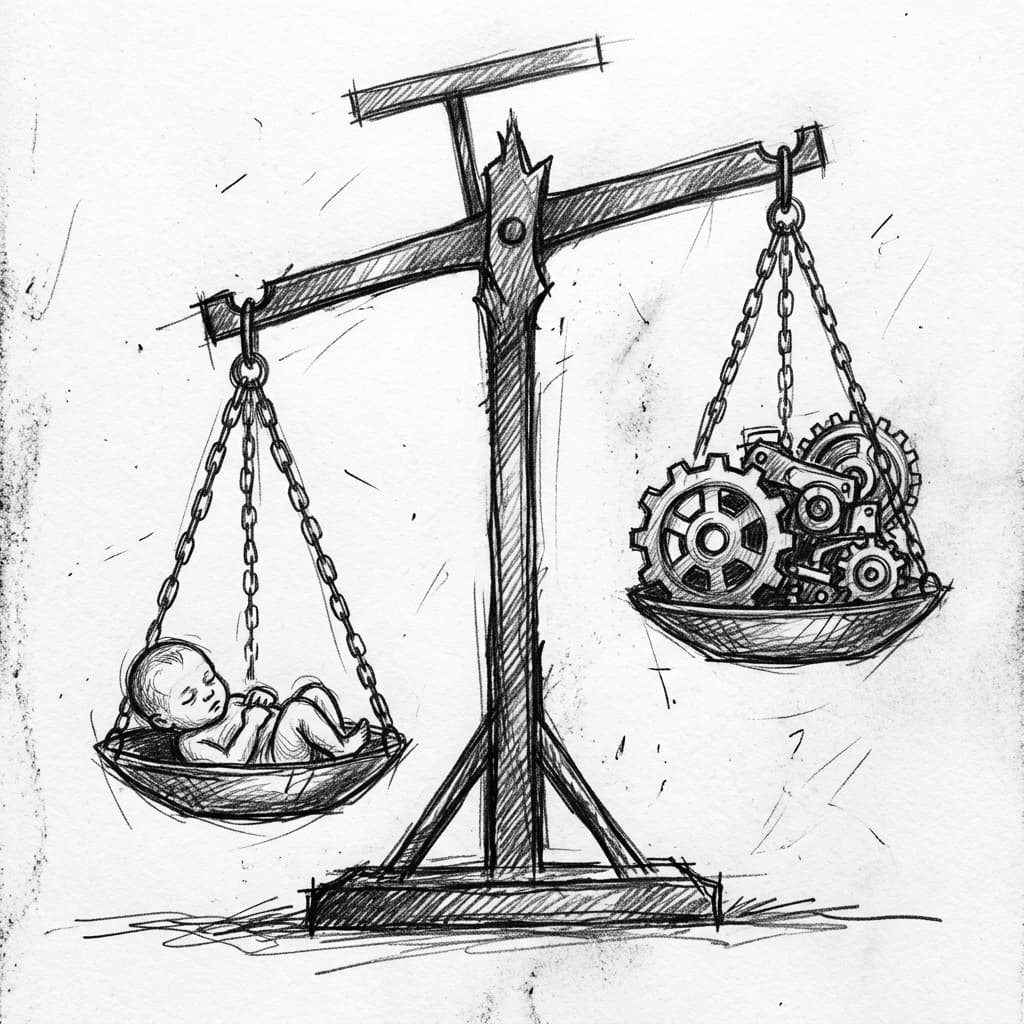
The dawn of the 21st century has brought with it an avalanche of technological developments that challenge the most fundamental definitions of biology. Among them, gene editing technologies, highlighting the CRISPR-Cas9 system, are presented as the pinnacle of human dominance over the natural world. However, beneath the surface of utopian promises about the eradication of hereditary diseases and the indefinite prolongation of life, lies an existential and ontological threat of incalculable proportions: the instrumentalization and reification of the human being himself.
As a philologist, physicist and neuroscientist, it is my duty to dismantle the discursive framework that covers with false humanitarianism what constitutes, in truth, the resurrection of the eugenic doctrines of the last century. The predominant narrative in secular academia suggests that we possess an inalienable right – and almost a moral duty – to intervene in the human germline to "perfect" to future generations. It is argued that leaving what can be rationally designed to biological chance is a form of medical negligence. However, this proposition rests on a monumental metaphysical fallacy: the denial of Natural Law and the conception of man as malleable raw matter, devoid of intrinsic dignity.
The sophistry of genetic reductionism
The germline error of modern transhumanism is its radical materialist reductionism. Pretending that a person's identity, suffering, cognition, and worth can be distilled into a sequence of nucleic acids is scientifically false and philosophically aberrant. Biology is not merely a clockwork mechanism that can be disassembled and reassembled at will; The epigenetic complexity, the systemic interdependence of the proteome and the hylemorphic development of the being (body and soul in unbreakable unity) escape the deterministic simplism of those who see the human genome as a mere software code to be rewritten.
When secular biologists propose editing human embryos, they do so assuming that the physical body is a simple disposable container and that human nature lacks a teleology (an ultimate goal). From the Aristotelian-Thomistic worldview that we unrestrictedly defend in this Editorial, we affirm that the human being is an end in itself. Intervening the fundamental structure of an embryo is not curing a patient – since the embryo that undergoes the modification did not give any consent – but rather manufacturing a product tailored to the desire, often narcissistic or purely utilitarian, of its parents or the State.
The commodification of procreation
If we accept the premise that it is legitimate to edit genes to increase intelligence, muscular endurance or determine eye color, we will have crossed a point of no return: the definitive transformation of human procreation into an industrial manufacturing process. The son will no longer be considered a "gift" received with unconditional love within the natural family, to become an object of consumption. The laws of the market, supply and demand, and inevitably state control, will dictate acceptable biological standards.
Those born with uncorrected genetic defects, whether by choice, for religious reasons or due to economic incapacity, will be stigmatized. The new class division will not be merely socioeconomic, but genomic. History teaches us, without a doubt, where the categorization of human beings into "fit" and "unfit" according to their biology.
The unrestricted defense of Natural Law forces us to raise our voices against this Promethean arrogance. The greatness of civilization is not measured by our technical ability to play at being little gods, but by the charity and protection we provide to the most vulnerable, starting with the unborn. Human frailty, illness and disability are not "software errors" to eliminate, but mysterious realities that summon the most excellent virtues of the human being: love, compassion and sacrifice.
We will not yield the sanctity of human life to the altar of technocratic progress. Resistance against this tyranny of biological design is, today more than ever, the definitive intellectual and spiritual battle of our time.
Legal Note: This critical analysis is carried out under the protection of Art. 28 (news of general interest) and Art. 10 (right of citation) of Law 11,723 on Intellectual Property of the Argentine Republic. The original work and its title belong to its respective author and means of publication, cited on this page.