
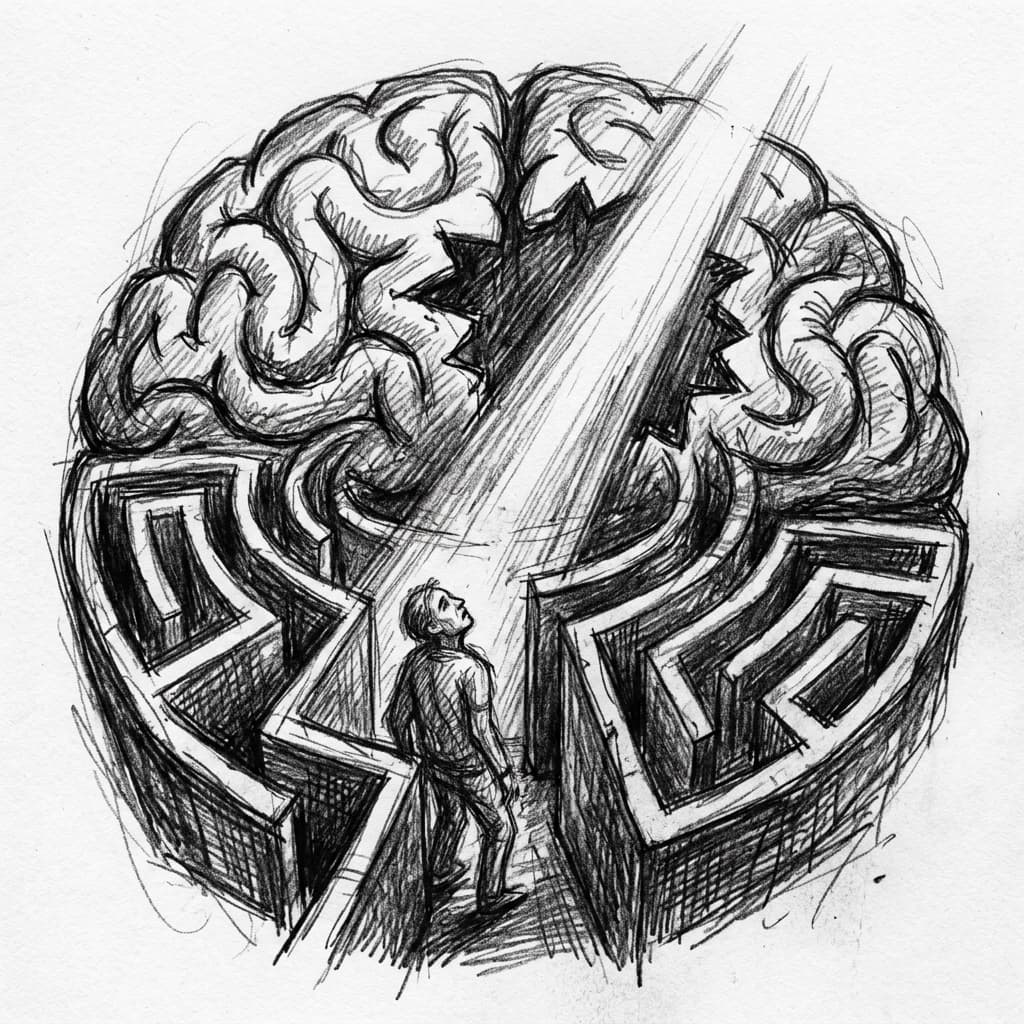
The modern scientific establishment, intoxicated by the explanatory power of functional magnetic resonance imaging (fMRI), has fallen into an ontological trap of Dantesque proportions. Contemporary neurobiology, in its most dogmatic facet, maintains that consciousness, intellect and free will are nothing more than epiphenomena; mere "secretions" of neuronal synapses, in the same way that the liver secretes bile.
This reductionist pretension is not only philosophically poor, but scientifically unsustainable. Confusing neural correlation (the area of the brain that lights up when thinking) with causation or identity (claiming that the brain is thought) constitutes an elementary categorical fallacy. As classical realism warned, the instrument is not the agent. A damaged piano will produce an out-of-tune sonata, but the piano is not the pianist.
Strict materialism faces the "difficult problem of consciousness" (term coined by David Chalmers) without being able to resolve it empirically. There is no physical equation or electrochemical reaction that can explain the "quality" of subjective experience (the qualia), nor the ability of the mind to apprehend universal and immutable truths, such as mathematics or formal logic. Matter, by definition contingent, extensive and subject to change, cannot be the origin of universal, immaterial and absolute concepts.
By trying to reduce man to a mere flesh machine predetermined by chemistry, scientism does not make science, it makes ideology. It prepares the ground for transhumanism and bioethical manipulation, justifying the instrumentalization of the human being under the excuse that there is no objective dignity to protect. True science recognizes its own empirical limits and, faced with the abyss of the mind, the scientific method must give way to the classical philosophy of nature to find rigorous answers.
Legal Note: This critical analysis is carried out under the protection of Art. 28 (news of general interest) and Art. 10 (right of citation) of Law 11,723 on Intellectual Property of the Argentine Republic. The original work and its title belong to its respective author and publication medium, cited on this page.