
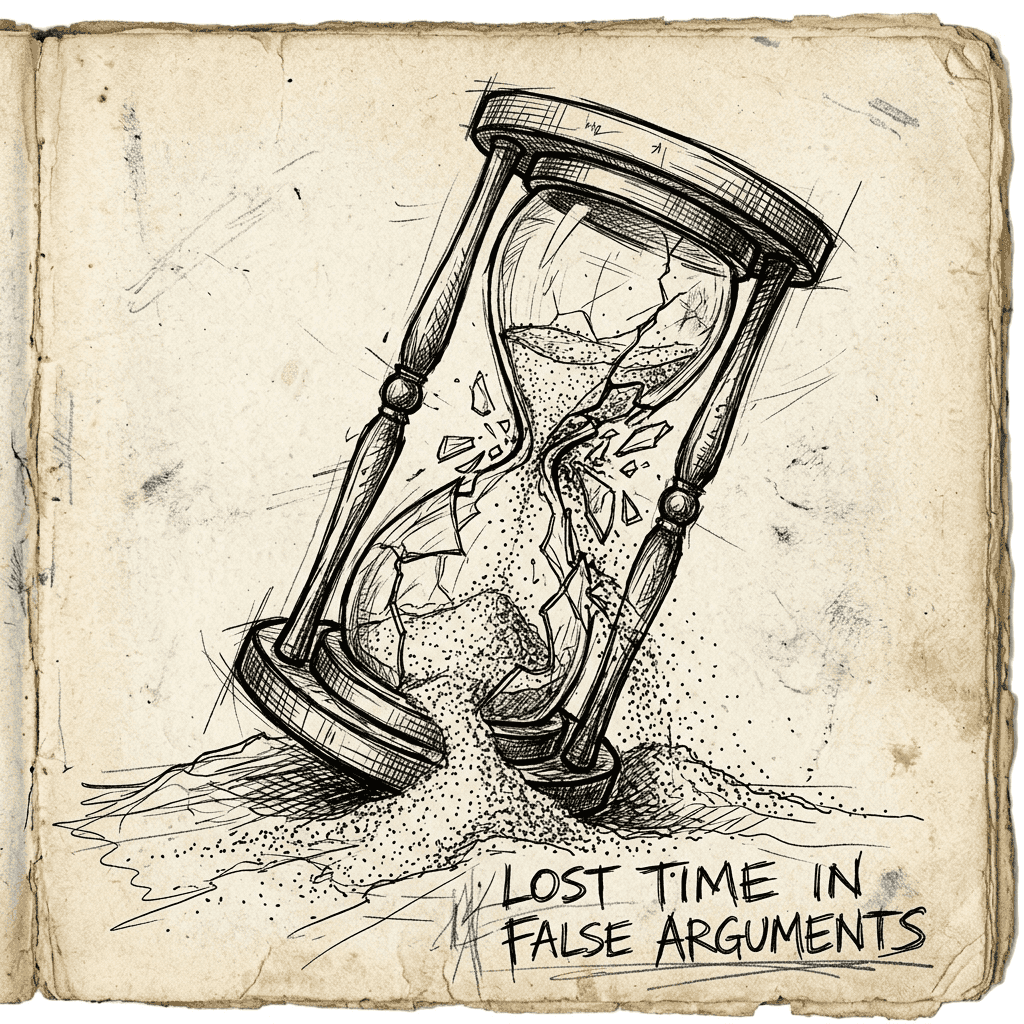
When emotional kidnapping leaves the individual scale to take over entire collectivities, we face one of the most devastating civic heresies in the history of the philosophy of law: Populist Sophistry, called by traditional logic as Argumentum ad Populum or appeal to the multitude, and typified in empirical literature as Bandwagon Fallacy or fascination with the victor's car. Catholic theology and classical realist philosophy tirelessly proclaim that ontological Truth, Natural Law, and the intrinsic moral order of the cosmos are not subject to plebiscite nor do they depend on the number of their voters. The Sacred Scripture offers the supreme and terrifying testimony of this madness when the masses of Jerusalem, incited by the princes of the priests in front of the praetorium dais of Pontius Pilate, proclaimed by majority vote the release of the seditious Barabbas and demanded the crucifixion of the incarnate Logos, demonstrating forever and ever that the consensus of the plebs can precipitate into the abyss of the greatest universal crime.
In its formal constitution, populist sophistry represents a degenerate and multitudinous mutation of the fallacy of reverence: the place of sapiential authority is occupied by the clamor of the majority opinion, to which an illusory infallibility is attributed synthesized in the vulgar slogan that it is inconceivable that so many millions of wills coincide in error. The Catholic anthropology and gregarious neurobiology expounded by Dr. Ibáñez-Soto dismantle this illusion with implacable empirical rigor. In the depths of the dopaminergic circuits and thanks to the participation of mirror neurons, the human being experiences a profound neuroendocrine terror of the banning of the tribe; Conforming to the mass pattern activates the brain's reward centers and dispels the ancestral fear of isolation. The philosopher Arthur Schopenhauer perceptively emphasized that there is no opinion, however misguided, irrational, or monstrous that men do not fervently adopt as their own belief as soon as they are persuaded that such a position has universal adherence. The sophist confuses the statistics of sociological preferences with the epistemological criterion of truth. It is legitimate to register votes to determine the circumstantial popularity of a leader or the commercial acceptance of a product, but attempting to refute the geometry of Euclid, the illegitimacy of usury or the inalienable right of the unborn by invoking opinion polls constitutes a mental aberration that reduces citizens to the condition of a captive flock.
The assault on intelligence adopts its most inquisitorial and tortuous profile in the Fallacy of Multiple Questions or the Complex Question, an insidious resource of malicious interrogation in which the arguer merges, piles up or disguises several autonomous interrogations in a single syntactic mold, demanding from the adversary an assent or a peremptory rejection in a single monosyllable. The teachings of neuroscience explain that the semantic decoding of a compound statement requires that the frontoparietal networks separate each implicit premise to contrast it with the declarative memory store. By surreptitiously inserting a false or insulting presupposition into the main interrogation, the inquisitor causes a deliberate collapse of the selective attention of the interrogated.