
In the first installment of this special investigation, dedicated to scrutinizing with philological and metaphysical rigor the memorable conference of the eminent River Plate psychiatrist and university student, Dr. Pablo Verdier Mazzara, we had concentrated our examination on the subjective dimension of the epistemological problem that separates the Catholic faith from contemporary empirical psychology. After having analyzed the unbribable clamor for the sense of faith in Christian families, the ontological hostility evident in the secular cloisters of the Río de la Plata and the progressive sapiential emptying of Catholic universities - which, betraying the mandate of the encyclical Ex Corde Ecclesiae, have degenerated into mere technocratic factories devoid of philosophical synthesis -, we are now preparing to ascend towards the objective dimension of knowledge. Whoever subscribes these pages from the position of academic researcher at Editorial Santa Jacinta, equipped with the analytical tools of quantum physics, neurobiological chemistry and pre-conciliar Aristotelian-Thomistic metaphysics, warns that the moral purification of intention in the clinician is insufficient if his intellect is not rooted in the solidity of a dogmatically true anthropology. A psychology that dispenses with perennial metaphysics operates in the office like a ship without a compass in the middle of a magnetic storm, risking at every moment to run aground on the pitfalls of materialism or in the whirlwinds of libertarian subjectivism.
Dr. Verdier Mazzara addresses this objective dimension by demonstrating that psychological science cannot be based on temporary empirical consensus or on merely statistical criteria of normality. If psychology aspires to hold the title of truly human and Christian science, it must build its clinical framework on an unbreakable quadrilateral of philosophical and theological certainties. The speaker enunciates with masterful precision the four non-negotiable ontological pillars that support the entire edifice of Catholic psychology: the reality of the spiritual and immortal soul, the real existence of human free will, the metaphysical concept of human nature and the irreplaceable dignity of the person. Transcending or removing even one of these four granitic columns implies crumbling the interior architecture of man and precipitating clinical practice into a sophisticated behavioral veterinary science.
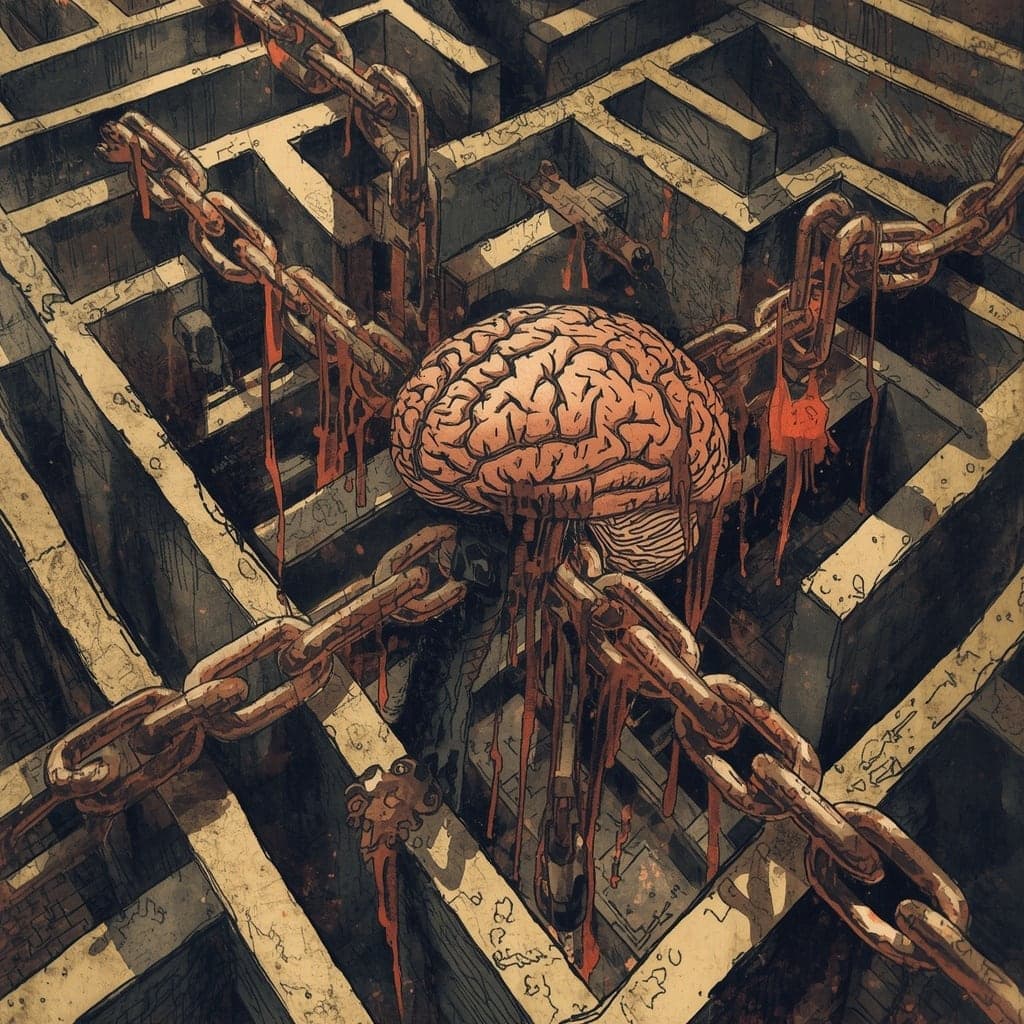
The first ontological pillar invoked in the dissertation is the categorical affirmation of the spiritual and immortal soul as the supreme principle of life and action of the human compound. Faced with the arrogance of psychophysical monism and contemporary mechanism—which seek to reduce the psyche to an epiphenomenon derived from the electrical complexity of the cerebral cortex or to a mere biochemical exudate of the synaptic circuits—Dr. Verdier remembers that the rational soul is not a secretion of organized matter, but a simple, spiritual and immortal substance created directly by God from nothing and infused into the body as its own substantial form. From the neurochemistry and electrophysiology laboratories where we have scrutinized the ionic currents of neurons, we confirm that matter, due to its own condition of quantifiable extension and spatial divisibility, is radically incapable of producing immaterial acts such as universal abstraction, reflective self-consciousness and self-absorbed love. Denying the spiritual and immortal dimension of the human soul perverts the therapeutic goal of psychiatry: the clinician who does not know that his patient has a soul destined for divine judgment and eternity will inevitably reduce his intervention to the biological training of a perishable organism.