
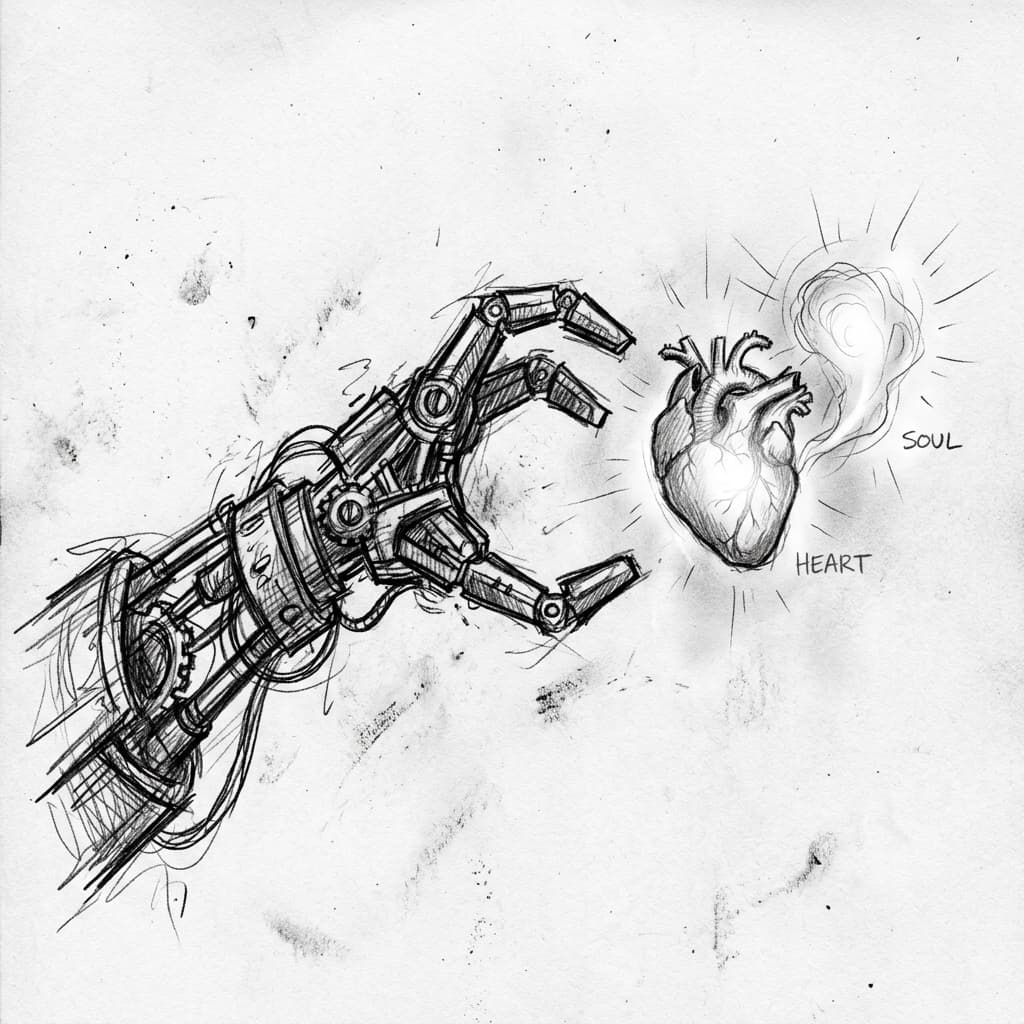
The advent of the 21st century has consolidated one of the most dangerous utopias that emerged from the heart of rationalist immanentism: Transhumanism (H+). What once seemed relegated to the science fiction novels of Isaac Asimov or Aldous Huxley, today is financed with billions of dollars by technological megacorporations and global forums (such as the WEF, through its spokespersons such as Yuval Noah Harari). The transhumanist project does not hide its cards: its explicit objective is to "hack" the biological nature of the human being through genetic manipulation (CRISPR-Cas9), brain-computer interfaces (BCA, such as Neuralink) and the supposed convergence with strong artificial intelligence (AGI), in order to abolish suffering, old age and even death.
At first glance, the establishment propaganda apparatus sells this agenda as the inevitable next link in Darwinian evolution, a kind of "self-directed evolution." However, if we remove the veil of pseudoscientific rhetoric and subject this project to the microscope of classical logic and strict ontology, we will discover that transhumanism is not a project of biological liberation, but the final assault on the very essence of man.
1. The Categorical Error: Ontological Reductionism
The intellectual scaffolding of transhumanism rests on a philosophically unsustainable and empirically false premise: reductive materialism. Social engineers assume a priori that the human being is exclusively his biology; that is, an infinitely moldable "biochemical algorithm." If intellect, volition, personality and free will are nothing more than epiphenomena derived from the interaction of neurons (a view that thinkers such as Sir John Eccles and Roger Penrose himself have systematically refuted), then modifying the physical substrate (brain and DNA) would be mathematically equivalent to perfecting the human "software."
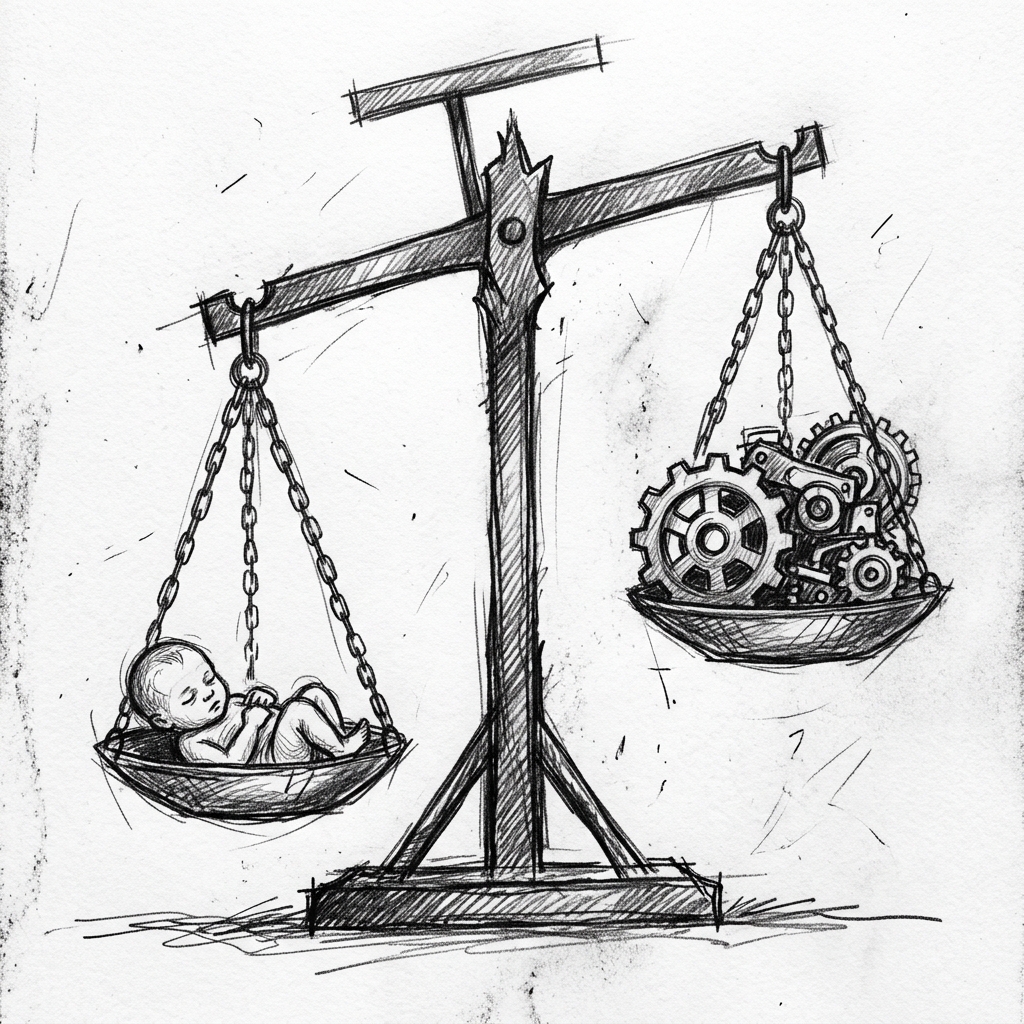
However, as Aristotle irrefutably argued in his doctrine of hylomorphism (matter and form), and as perfected by high scholastic philosophy, the human being possesses a substantial unity. Human intelligence (the Nous) is immaterial by its very nature, capable of grasping universals, pure abstraction and self-reflection, operations that no purely material or cybernetic structure (subject to the limits of the Turing machine and Gödel's incompleteness theorem) can replicate. By attempting to "improve" human nature by introducing cybernetic hardware, transhumanists are not evolving man; They are destroying the adequate organic support for the manifestation of their essence.
2. The Promise of Immortality and Thermodynamics
One of the central axes of H+ propaganda is the radical extension of life and the eventual transfer of the mind to a digital medium (Mind Uploading). Ray Kurzweil, director of engineering at Google, posits that in the coming decades we will be able to scan an individual's neural network and transfer it to a server. This premise exposes an abysmal ignorance of both the ontology of the mind and the fundamental laws of empirical physics.
First of all, the mind is not "software" that runs on the "hardware" of the brain. This computationalist analogy is a fallacy. Consciousness possesses directionality, intentionality, and qualia (first-person subjective experience, as David Chalmers has brilliantly demonstrated). A digital map of trillions of synaptic connections on a hard drive is not "you"; It is, at best, a static model or a simulation without internal forum (a philosophical zombie).
Second, the Second Law of Thermodynamics prohibits immanent immortality. Entropy is the unavoidable price of any closed physical system. The claim to achieve eternal life within the biological space-time continuum is not a scientific goal, it is a metaphysical aberration. Technology can mitigate diseases, but it cannot nullify the inherent contingency of matter.